
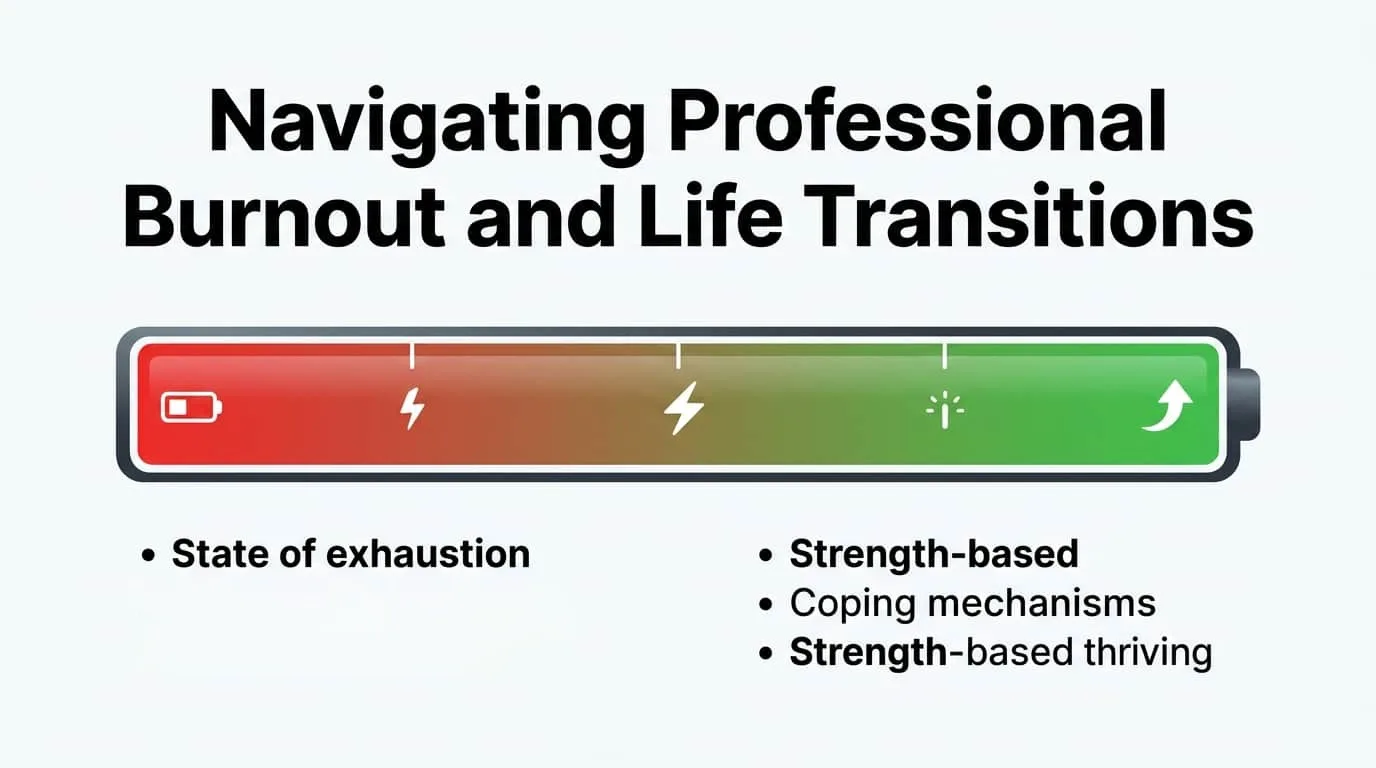
Burnout doesn't announce itself. One day you're grinding through back-to-back meetings in Baldwin Park, and the next you're sitting in your car wondering why you dread the very career you worked so hard to build. If that sounds familiar, you're not alone—and you don't have to keep pushing through it. Evolve Counseling & Wellness offers therapy Orlando Florida residents can access in person or virtually, with a focus on helping high-performing professionals find clarity during exactly these kinds of seasons. Call (407) 616-5948 to schedule a free phone consultation today.
Orlando's job market has grown fast over the past decade. Healthcare, tech, hospitality, and finance sectors have all expanded significantly across Central Florida, drawing ambitious professionals who came here to build something real. The opportunity is genuine. So is the pressure that comes with it.
This post breaks down what professional burnout actually looks like, how to tell it apart from ordinary stress, and what practical steps help you move through a career transition without losing yourself in the process.
What Does Professional Burnout Actually Feel Like?
Professional burnout isn't just feeling tired after a hard week. It's a prolonged state of emotional, physical, and mental exhaustion that builds over months, often without a clear trigger. Research from the American Psychological Association shows that 79% of employees reported experiencing work-related stress in the past month, and nearly 3 in 5 reported negative impacts from that stress, including lack of motivation and reduced energy.
In Orlando's high-growth professional environment, burnout tends to show up as:
- Persistent cynicism about your work, even in roles you once found meaningful
- Cognitive fog that makes routine decisions feel overwhelming
- Physical symptoms like chronic headaches, disrupted sleep, or frequent illness
- Emotional detachment from colleagues, clients, or your own goals
- A creeping sense that nothing you do makes a difference
The tricky part? Many Orlando professionals mistake burnout for laziness or weakness and keep pushing. That's usually when things get harder to recover from.
Why High-Performance Careers in Florida Create Unique Pressure
Florida's job market rewards hustle. Entrepreneurs and professionals in growing sectors often work 50-60 hours a week without a clear off-switch, partly because the environment encourages it. Warm weather and year-round outdoor activity can make it easy to forget that rest is productive. But without intentional recovery time, even the most driven professionals hit a wall.
Working in industries like healthcare near the Medical City in Lake Nona, or in tech corridors around the Dr. Phillips area, often means constant on-call availability and high stakes decision-making. There's a culture in these spaces that treats rest as optional. It's not.
One thing I see repeatedly in clients who come in for therapy Orlando Florida services: they've spent so long optimizing their output that they've completely lost touch with what they actually want from their career. That disconnect is one of the clearest early signs of burnout.
Is It a Rough Week or a Real Turning Point?
A stressful week and genuine burnout require very different responses. Knowing the difference matters because the wrong response, say, taking a short vacation when you actually need to restructure your entire career, can cost you months of unnecessary suffering.
A rough week typically has a clear cause (a product launch, a difficult client, a tough deadline) and resolves once that cause passes. Energy returns. Motivation comes back. You feel yourself again within a few days.
Burnout, by contrast, persists regardless of what changes around you. Rest doesn't restore you. Even positive things at work feel hollow. This state rarely resolves on its own, and waiting it out can extend the recovery period from weeks to years.
A good rule of thumb: if you've felt consistently depleted for more than 4-6 weeks, and the feeling doesn't lift even after time off, that's your signal to take it seriously. Strength-based in-person therapy can help you identify which category you're in and build a plan from there.
How Do You Rebuild After a Major Career Shift?
Rebuilding your professional identity after burnout or a major pivot takes longer than most people expect. Six months to a year is a realistic timeframe for sustainable change, not a personal failure. Here's what actually works:
Audit your values before your resume. Most career pivots fail not because of skills gaps but because people jump to a new role that carries the same values mismatch as the old one. Spend time getting clear on what actually matters to you before you update your LinkedIn.
Rebrand in stages. You don't have to announce a full reinvention. Start by taking one skill from your current role and applying it in a new context, whether that's a side project, a volunteer role, or a lateral move within your organization. This builds confidence without the risk of a complete overhaul.
Build a small, specific network. In Orlando, local professional groups, co-working spaces in neighborhoods like Thornton Park, and industry meetups provide real connection with people who understand the market. Broad networking often leads nowhere. Deep relationships with 5-10 people in your target field move the needle.
Set financial buffers before you leap. Career transitions cost money. A general guideline is to have 3-6 months of expenses saved before making a significant move, especially if you're leaving a salaried role. Knowing your runway reduces panic and gives you room to make thoughtful decisions.
Accelerated Resolution Therapy is one approach that works well for professionals navigating these transitions. It's particularly effective for clearing the emotional residue (self-doubt, fear of failure, grief over a lost identity) that can stall an otherwise well-planned pivot.
Can Florida's Outdoor Lifestyle Actually Help with Burnout Recovery?
Yes, and it's one of the advantages Orlando residents have that often goes unused. Regular outdoor activity has a measurable impact on burnout recovery. Studies show that spending at least 120 minutes per week in natural environments is associated with significantly better mental health outcomes.
Orlando's trail system, the Little Econ Greenway and the West Orange Trail among them, offers easy access to outdoor movement without requiring a long drive. Lake Eola in the heart of the city provides a 0.9-mile walking loop that dozens of downtown professionals use during lunch breaks as a genuine mental reset.
That said, outdoor wellness works best as a complement to structured support, not a replacement for it. Many clients find that pairing regular movement with therapy Orlando Florida sessions creates the kind of two-sided recovery that actually sticks.
Local community also plays a real role. Orlando has active professional wellness groups, burnout recovery communities, and peer support networks that weren't here five years ago. Connecting with people who are going through something similar reduces the isolation that makes burnout harder to overcome.
Ready to Stop Running on Empty?
Burnout isn't a character flaw. It's a signal worth listening to. The professionals who recover well aren't the ones who pushed harder; they're the ones who got honest about what wasn't working and got real support to change it.
Evolve Counseling & Wellness works with Orlando professionals navigating burnout, career transitions, and the emotional weight that comes with both. Dorian Race, LMHC, brings a strength-based approach that treats you as a capable person working through a hard season, not a problem to be fixed. Sessions are available in person in Baldwin Park and virtually throughout Florida.
Call (407) 616-5948 to book a free phone consultation and take the first real step toward a career and life that actually fits.